Tropical Storm Impacts
Wind, Rainfall, Storm Surge & Secondary Effects
Key Concept
Vulnerability ≠ Magnitude: The same hurricane causes vastly different outcomes depending on where it hits. LICs experience more deaths; HICs experience more economic damage.
Primary Impact Types
- • Roofs torn off buildings
- • Trees uprooted/snapped
- • Power lines down
- • Flying debris (lethal)
- • Transport disrupted
- • Flash flooding (low areas)
- • Landslides (steep terrain)
- • Waterborne diseases
- • Crop destruction
- • Freshwater contamination
- • Sea rises 1-5+ metres
- • Floods 10+ km inland
- • Drowning (deadliest)
- • Saltwater contaminates land
- • Destroys fishing industry
Storm Surge Formation
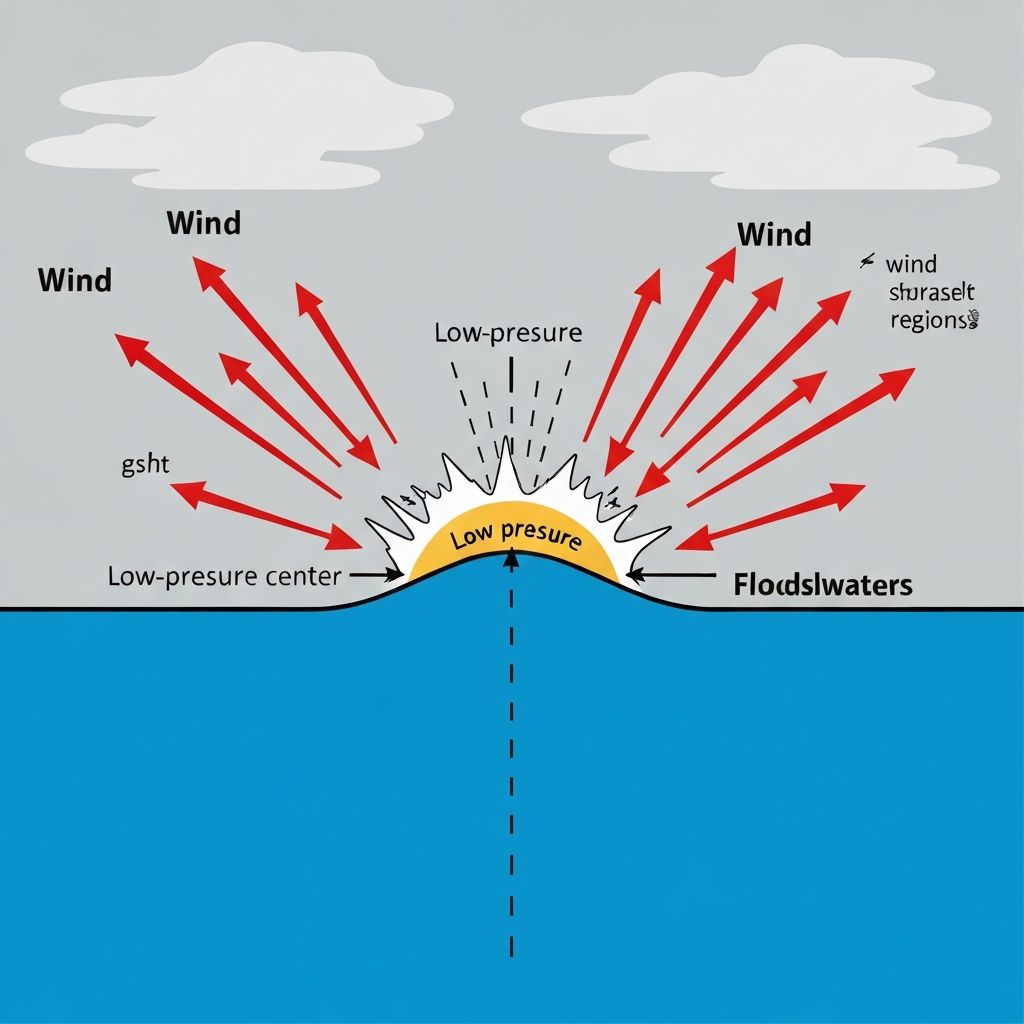
Storm surge is caused by two factors: (1) low pressure at the eye lifts the sea surface, and (2) powerful winds push water toward shore. When this combines with high tide and waves, surge can exceed 7 metres.
Secondary Effects
Disease Outbreaks
Cholera, typhoid, dengue from contaminated water
Malnutrition
Crop failure leads to food shortages
Economic Collapse
Unemployment, poverty increase, business failures
Psychological Trauma
PTSD, depression, anxiety disorders
Environmental Damage
Soil erosion, habitat destruction, deforestation
Migration
Environmental refugees flee uninhabitable areas
Impact Cascade
Click each impact to reveal the secondary effects it causes:
LIC vs HIC: Same Storm, Different Outcomes
LIC Hurricane Impact
- Warning systemsLimited
- Building codesPoor/none
- HousingInformal
- Emergency servicesUnder-resourced
Result: HIGH death toll
Cyclone Nargis (Myanmar): 138,000 deaths
HIC Hurricane Impact
- Warning systemsAdvanced radar
- Building codesHurricane-rated
- EvacuationMandatory zones
- Emergency servicesWell-equipped
Result: HIGH economic damage
Hurricane Katrina (USA): $125 billion damage
Interactive Simulators
292
Deaths
$12bn
Damage
59k
Displaced
Key Insight:
NEEs show mixed impacts - improving warning systems reduce deaths, but growing cities increase economic exposure.
Scenario:
You are planning disaster reduction for a coastal city with limited budget. A Category 4 hurricane is forecast to hit in 3 days. You can only fund ONE priority:
Same Category 4 hurricane, same coastal city. How does the track affect impacts?
Test Your Knowledge
Identify the impact type:
"Roofs torn from buildings, power lines down, debris flying through streets"
Exam Practice
Hurricane Maria (2017) hit Puerto Rico (USA territory, HIC) as Category 4. Death toll: 3,000+, mostly indirect deaths over months. Cyclone Nargis (2008, Myanmar, LIC) killed 138,000. Using your knowledge of tropical storm impacts, explain the extreme variation in death tolls for similar storms. (6 marks)