Causes of Uneven Development
Why some countries are rich while others remain poor - physical, economic, and historical factors
Key Question: Why is development so uneven globally? Why are some countries rich while others are trapped in poverty?
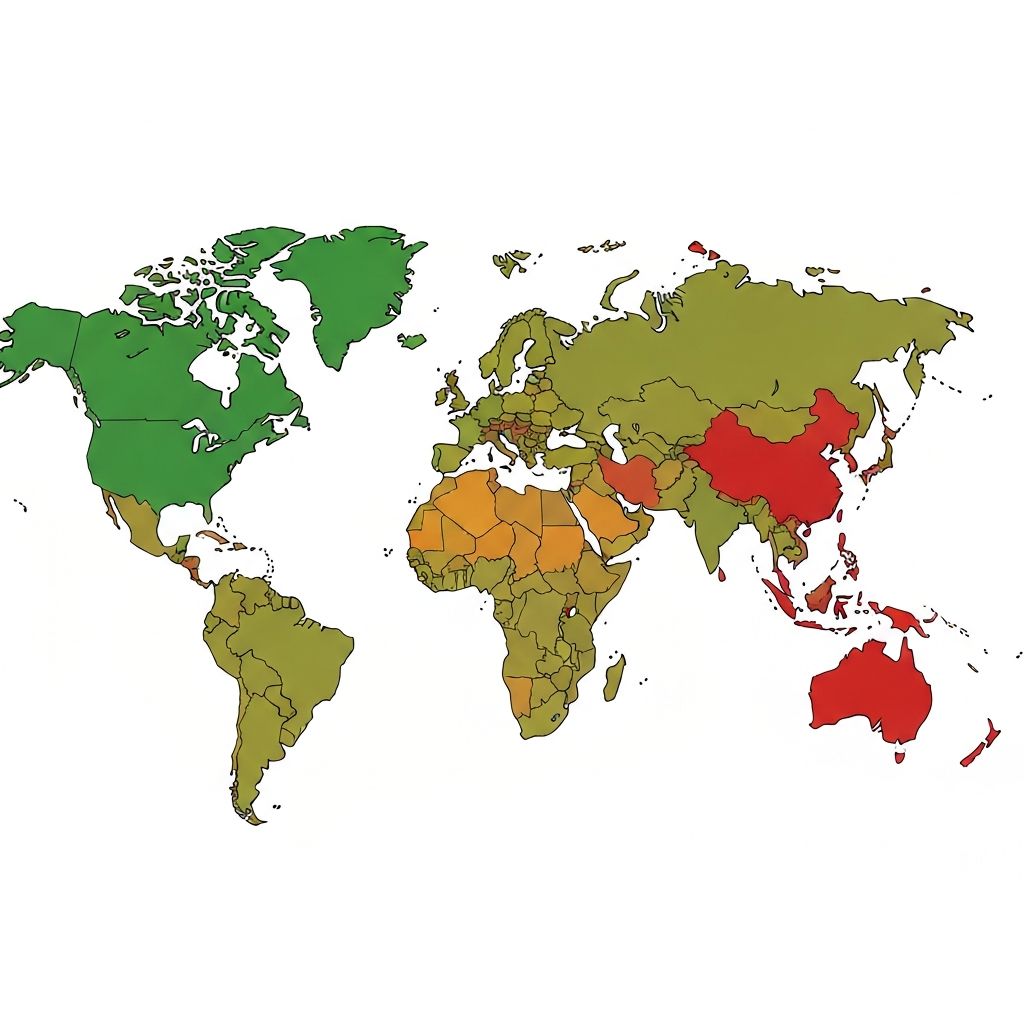
The world shows stark inequality: HICs (mostly in North America, Europe, Australia) have GNI per capita over $13,000, while LICs (concentrated in sub-Saharan Africa) have less than $1,100. This isn't random - it's the result of physical, economic, and historical factors interacting over centuries.
Landlocked Countries
No coastline = no ports → limited trade access
Examples: Chad, Afghanistan, Bolivia
Impact: Trade costs 50%+ higher
Topography
Mountains = difficult infrastructure, limited agriculture
Examples: Nepal, Afghanistan
Impact: Roads/railways expensive, isolated communities
Climate
Extreme heat/cold limits agriculture and productivity
Examples: Sahel (Chad, Niger), Mongolia
Impact: Malaria costs Africa $12bn/year
Natural Hazards
Earthquakes, cyclones, droughts destroy development
Examples: Haiti 2010, Bangladesh cyclones
Impact: LICs can't afford to rebuild
Trade Imbalances
LICs export low-value primary products
Ghana: exports cocoa beans (low price)
UK: exports chocolate bars (high price)
Value added in HICs
Debt Burden
LICs borrowed 1970s-80s, trapped in repayments
Mozambique: 36% of budget on debt (2000)
Money for debt, not development
Lack of Investment
Foreign companies avoid 'risky' LICs
Most FDI → China, USA, UK
No capital for industrialization
Colonialism
European powers extracted resources 1500s-1960s
Forced labor, destroyed local industries
Infrastructure for extraction, not development
Independence left countries unprepared
Conflict & War
Civil wars often legacy of colonial borders
Examples: South Sudan, Syria, Afghanistan
Development impossible during conflict
Poor Governance
Corruption, weak institutions deter investment
Example: Zimbabwe - collapsed despite resources
No rule of law = too risky for business
Multiple factors interact: Chad is landlocked + has Sahel climate + colonial legacy + ongoing conflict + poor governance = extreme poverty despite oil. Single-factor explanations are too simplistic.
Physical factors NOT destiny: Switzerland (landlocked + mountainous) is rich because political stability + banking + tourism overcame barriers. Singapore (no resources) is rich through strategic location + good governance.
Historical legacy persists: Colonial exploitation explains WHY LICs are poor TODAY - it's not about "lazy people" but systemic barriers created over centuries.
Self-reinforcing cycles: Poor → can't invest in education → unskilled workforce → low-value exports → poor. Breaking this cycle requires addressing multiple factors simultaneously.
Click cause type, then factor to explore details
Landlocked Countries
No coastline = no ports → limited trade access → isolated from global markets
Chad, Afghanistan, Bolivia
Trade costs 50%+ higher, foreign investment lower, economic growth slower
Switzerland (landlocked but HIC - mountains = tourism, political stability = banking)
Select a country to identify barriers to development
GNI per capita
$710
HDI
0.398 (Low)
Physical
- Landlocked (no ports)
- Sahel climate (extreme heat)
- Water scarcity
- Desertification
Economic
- Oil revenues mismanaged
- Primary exports only
- High debt burden
- Minimal foreign investment
Historical
- French colony until 1960
- Civil wars (1960s-present)
- Corrupt governance
- Ethnic conflicts
Analysis: Multiple factors interact: landlocked + climate + poor governance + conflict = extreme poverty despite oil
Click a factor to see how it connects to others and reinforces poverty
Navigate through history to see how colonialism created lasting barriers
Kingdom of Kongo
Sophisticated kingdom with trade networks, agriculture, and social systems. Population estimated 2-3 million.
Development Impact: Functioning society with own development path
Grade 8/9: This timeline shows why historical factors matter TODAY. Congo isn't poor because of "bad choices" - systematic colonial exploitation, followed by Cold War interference, created conditions where development was impossible. Understanding this context is essential for explaining uneven development.
Question 1 of 5
Chad is landlocked, has oil resources, but remains one of the world's poorest countries. Which combination of factors best explains this?
Explain why Chad is one of the world's poorest countries despite having oil resources. Consider physical, economic, and historical factors. [6 marks]