Nigeria: Role of TNCs
Shell Oil in the Niger Delta
Evaluating the costs and benefits of transnational corporations in NEE development
Transnational Corporations (TNCs) are large companies operating in multiple countries. Headquarters are usually in HICs, with operations worldwide.
Shell
Oil | HQ: Netherlands/UK
Unilever
Consumer goods | HQ: UK/Netherlands
Nestlé
Food | HQ: Switzerland
Shell Petroleum Development Company (SPDC) has operated in Nigeria since the 1950s, primarily in the Niger Delta region.
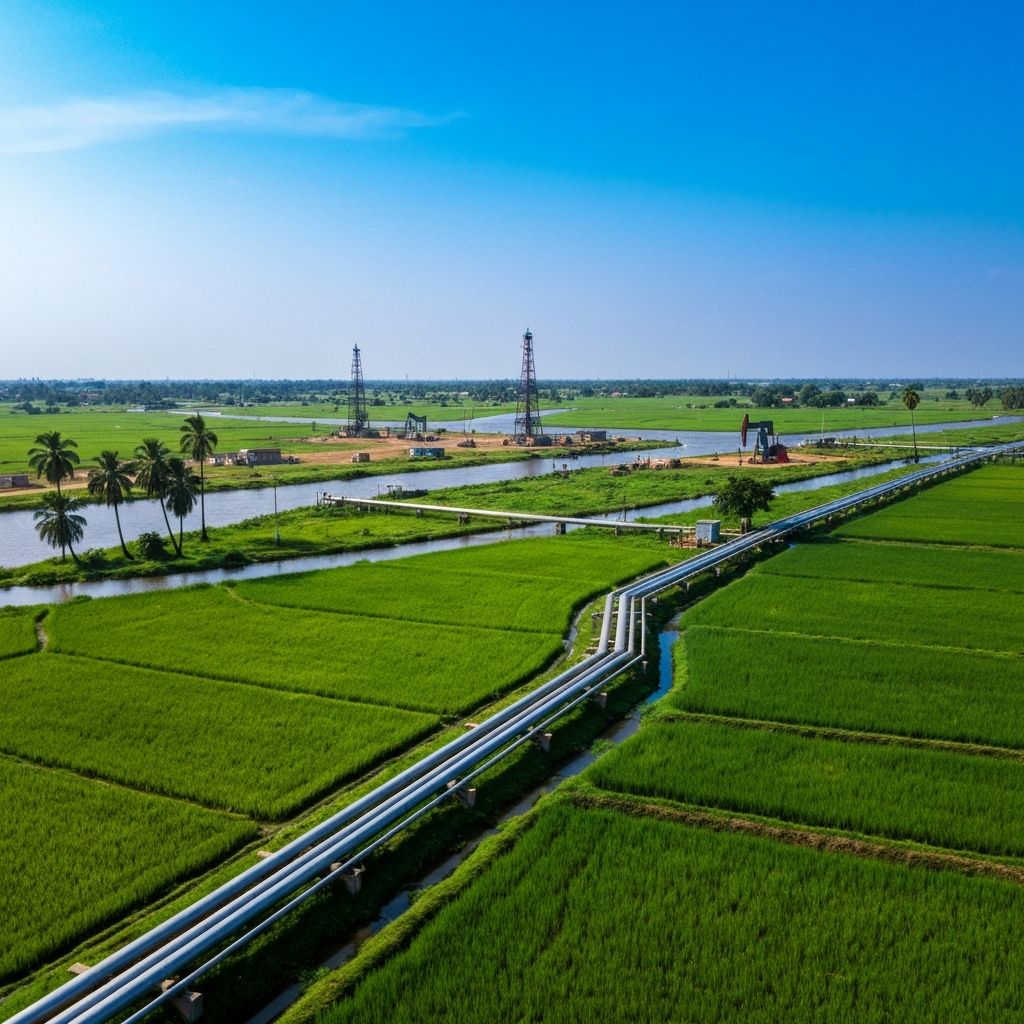
Niger Delta: Oil infrastructure amidst wetlands and communities
1. Employment
65,000 direct jobs (engineers, technicians, office staff) + 250,000+ indirect jobs (construction, catering, transport, security). Multiplier effect as wages spent locally.
2. Tax Revenue
Oil revenue = 90% of Nigeria's export earnings. Funds healthcare, education, infrastructure. BUT: Much lost to corruption.
3. Infrastructure
Shell built roads, improved Port Harcourt, created pipeline network. BUT: Built FOR oil extraction, not local benefit.
4. Technology Transfer
Advanced extraction techniques brought to Nigeria. Nigerian engineers trained → skills upgrade → NNPC (Nigerian National Petroleum Corporation) developed.
5. Economic Stimulus
Oil exports = foreign currency → enables imports. Rising GDP attracts other foreign investment.
1. Environmental Damage (SEVERE)
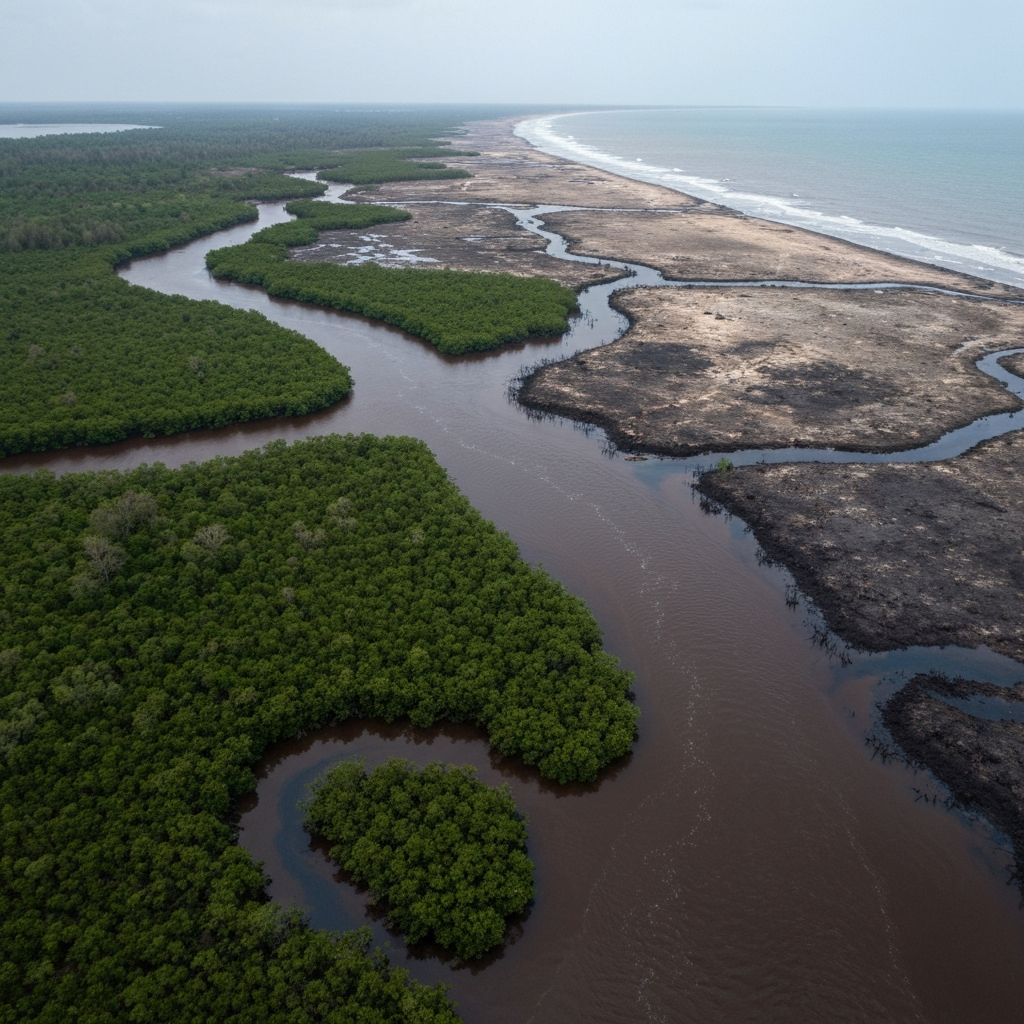
Oil pollution in Niger Delta waterways - fishing and farming destroyed
Oil spills: 1.5 million tons spilled over 50 years = equivalent to ONE Exxon Valdez disaster every single year.
Causes: Pipeline corrosion (poor maintenance), sabotage/theft (illegal bunkering), operational spills.
Bodo community (50,000 people): 2008-2009 spills destroyed farmland and fishing waters completely.
Water pollution: Rivers/creeks contaminated, drinking water unsafe (cholera, typhoid), fish stocks killed.
UNEP report (2011): Ogoni drinking water contaminated with benzene (carcinogen) at 900x WHO safe levels. Area needs 30 YEARS clean-up.
Gas Flaring
Burning off natural gas = air pollution, CO₂ emissions, respiratory illness, acid rain. Shell committed to stop by 2008 - STILL FLARING in 2026.
2. Profits Repatriated
80%+ of oil profits leave Nigeria → shareholders in Netherlands/UK/USA. Limited reinvestment in local development.
3. Worker Exploitation
Local workers paid less than expats for same job. Contract workers lack job security. Union suppression.
4. No Clean-up
Ogoni spills from 1993 - clean-up STILL incomplete in 2026 (33 years!). Shell blames sabotage, denies responsibility.
5. Conflict
Resource curse → corruption, inequality, violent conflict. Ken Saro-Wiwa executed 1995. Niger Delta militants sabotage pipelines.
6. Oil Dependency
Nigeria over-reliant on oil = vulnerable to price crashes (2014-2016, 2020). Agricultural sector neglected - Nigeria once self-sufficient in food, now imports.
Add factors to each side of the scale to see which outweighs
Roughly balanced - but costs and benefits affect different groups
Advantages (click to add)
Disadvantages (click to add)
Grade 8/9: Economic benefits accrue to Shell and Nigerian elites, while environmental costs are borne by the poorest communities. "Beneficial" depends entirely on your perspective.
Drag to see cumulative environmental damage over 68 years
Ogoni clean-up still incomplete after 33 years
Context: 1.5 million tons = equivalent to one Exxon Valdez oil spill every single year for 50 years.
Follow $100 of oil revenue - where does it actually go?
$100 of oil extracted from Niger Delta
$55 leaves Nigeria → Netherlands/UK/USA shareholders
$40 to federal government - BUT corruption...
$25 stolen by corrupt officials
$15 reaches healthcare, education, infrastructure
$3 benefits those living on the oil fields
Select a community and toggle Shell presence to see quality of life changes
Severe pollution, cancer rates elevated, drinking water contaminated with benzene 900x WHO safe levels
Economic benefits exist (employment, tax, technology) BUT profit leakage means limited local benefit. 90% export earnings sounds good until you see 80%+ leaves the country.
Environmental costs are CATASTROPHIC for affected communities. Pollution vastly outweighs economic gains for Niger Delta residents. The people who live on the oil get $3 from every $100 extracted.
Governance failure: Weak Nigerian regulation + corruption = TNCs operate with impunity. Shell repeatedly breaks environmental promises (gas flaring deadline).
Key conclusion: TNCs CAN benefit NEEs IF properly regulated (environmental standards enforced, profits taxed/retained, communities compensated). But Nigeria shows the exploitation model - benefits to TNC/corrupt elites, costs to poorest.
Question 1 of 5
Shell provides 65,000 direct jobs in Nigeria. Is this an advantage or disadvantage?
Evaluate the role of TNCs in Nigeria's development. Use Shell as an example. [9 marks]