Rio de Janeiro Challenges
Social, Economic & Environmental Challenges
Urban growth challenges concentrated in favelas due to informal, unplanned development
1,000+
Favelas
1.5M
Favela Residents
20%+
Population in Favelas
55%
Sewage Untreated
Managing Urban Growth: Favelas
What is a Favela?
Definition: Informal settlements built on marginal land (steep hillsides) without permission, with inadequate infrastructure. Also called slums or squatter settlements.
Why Favelas Form
- • Rural migrants can't afford formal housing
- • Occupy vacant land (steep hills, flood-prone areas)
- • Self-build shelters from scrap materials
- • Wood, corrugated iron, brick construction
Favela Characteristics
- • Density: Extremely overcrowded, narrow alleys
- • Buildings: Improvised, unsafe structures
- • Services: Limited water, illegal electricity
- • Tenure: No legal ownership = eviction risk
Example: Rocinha
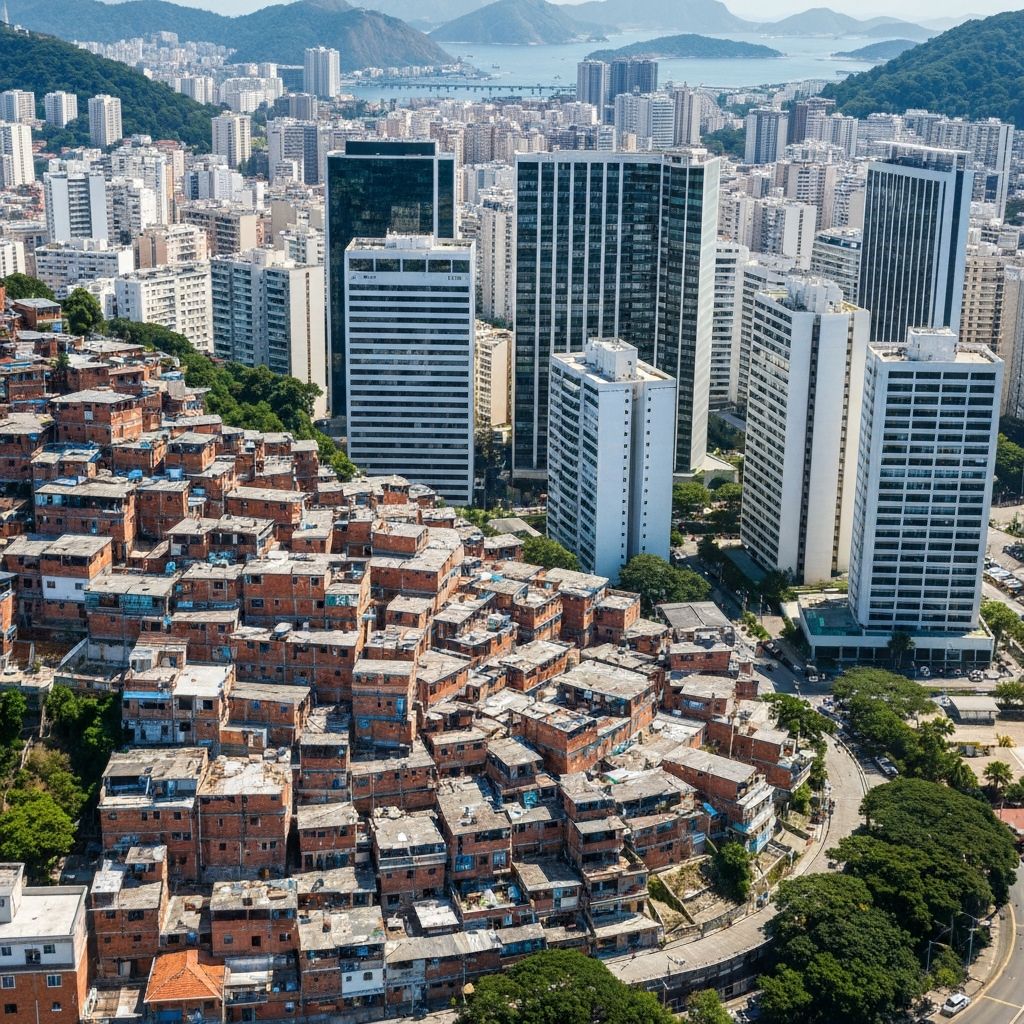
Rio's largest favela with 70,000-100,000 residents on a steep hillside in the South Zone. Houses crammed together with narrow alleys (no vehicle access), located between wealthy neighbourhoods and overlooking luxury apartments - a stark visual symbol of inequality.
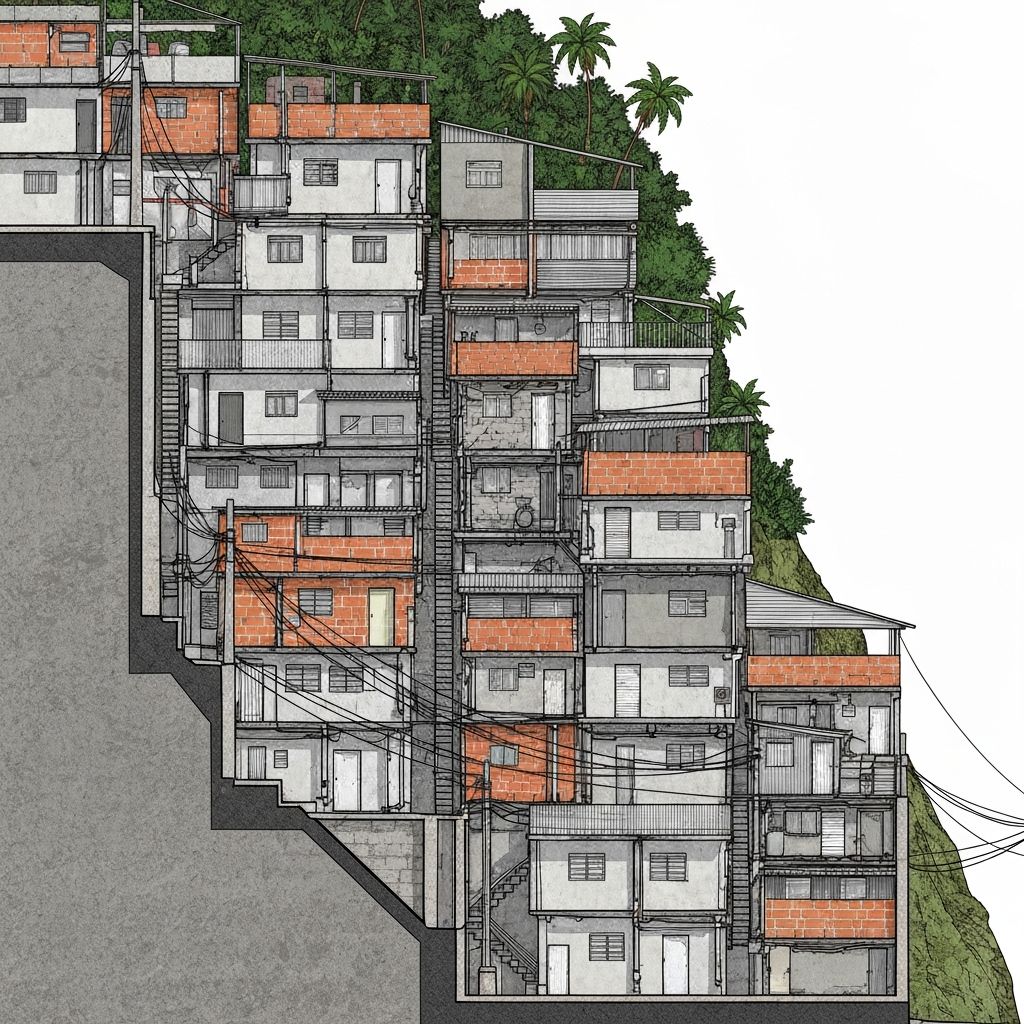
Grade 8/9 Key Point: Favelas are NOT just "slums of despair" - many have strong communities, local businesses, vibrant culture, and residents who have lived there for generations. BUT infrastructure deficits create severe challenges that require systemic solutions.
Click a service to compare favela vs formal city access
Social Challenges
- • Only 50% favela households have piped water
- • Rest use communal taps or illegal connections
- • Water quality unreliable - contamination from sewage
- • 12% of favelas have NO sanitation at all
- • Open sewers run down hillsides
- • Disease risk: diarrhea, cholera outbreaks
- • Illegal taps into grid = fire/electrocution risk
- • Estimated 30% favela energy is stolen
- • Frequent power cuts and blackouts
- • Limited clinics within favelas
- • Long waits at public hospitals
- • Gang violence prevents ambulance access
- • Schools overcrowded with poor facilities
- • High dropout rates - children work instead
- • Drug gangs recruit young people
- • Drug trafficking gangs control some favelas
- • Police violence: 1,000+ deaths/year in Rio
- • Residents caught between gangs and police
Economic Challenges
Unemployment & Informal Work
- • 20%+ unemployment in favelas
- • Most work in informal sector (street vendors, cleaners)
- • Low wages, no job security, no benefits
- • Formal jobs inaccessible (lack education, discrimination)
Extreme Inequality
- • Wealth gap visually stark
- • Rocinha (poverty) overlooks South Zone (luxury)
- • Same city, vastly different life chances
- • Inequality reinforces social divisions
Environmental Challenges
- • No formal collection in many favelas
- • Waste accumulates in streets and hillsides
- • Pollutes streams, attracts rats and disease
- • 2+ million vehicles cause emissions
- • Industrial pollution from oil refineries
- • Particulate matter exceeds WHO safe levels
- • 55% of Rio sewage is untreated
- • Guanabara Bay heavily polluted
- • Fish death, health risk, beach closures
- • Rush hour speed: 5 km/h (walking pace)
- • Inadequate public transport
- • Air pollution + time wasted + economic loss
Click a pollution type to explore sources, affected areas, and health impacts
How Challenges Connect
Click through to see how challenges connect in a cycle
Poverty
Low income, cannot afford formal housing
Test Your Knowledge
Only 50% of favela households have piped water, with the rest using communal taps. Which type of challenge is this?
Exam Practice
Explain why managing urban growth in Rio has been difficult. Refer to challenges in providing clean water and sanitation to favela residents. [6 marks]